

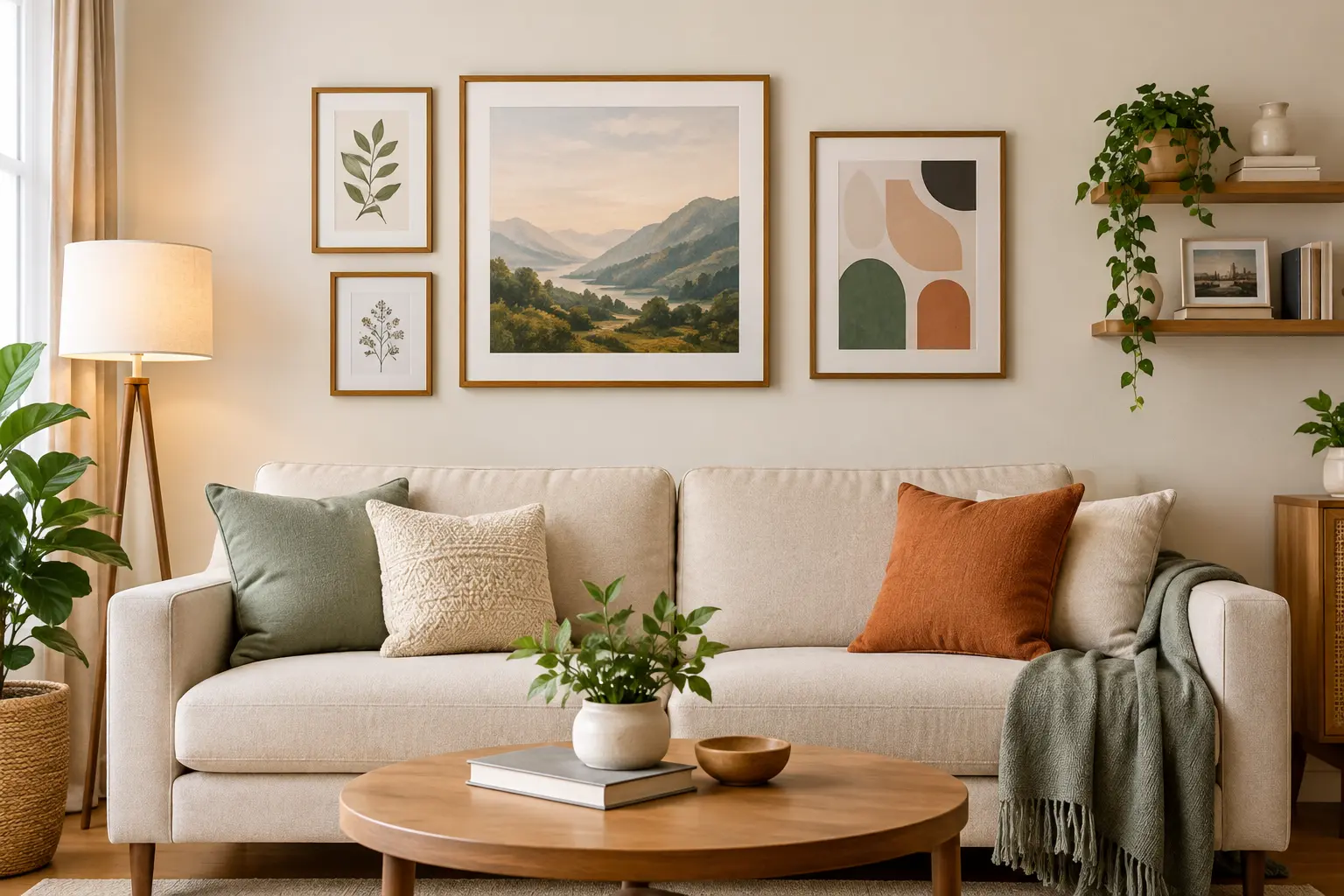
The right living room wall decor can change the look and feel of your home without requiring a complete renovation. Empty walls can make a room feel unfinished, while carefully chosen artwork, mirrors, shelves, photographs, and decorative accents can create a more welcoming space.
Your living room is often where you relax, entertain guests, spend time with family, and enjoy your favourite activities. Decorating its walls gives you an opportunity to express your personality and make the room feel more comfortable. You do not need expensive artwork or professional design services to achieve an attractive result. Simple changes can make a noticeable difference when you choose the right colours, sizes, materials, and arrangements.
In this guide, you will discover 25 practical living room wall decor ideas for modern apartments, traditional homes, small rooms, and larger living spaces. You will also learn how to choose wall art, arrange decorative items, work with different interior styles, and decorate your walls on a budget.
Whether you prefer a minimalist interior, a cosy farmhouse look, or a colourful contemporary design, these ideas can help you create walls that complement your home.
What Is Living Room Wall Decor?
Living room wall decor includes decorative objects, artwork, finishes, and arrangements that improve the appearance of your walls. These elements can create a focal point, add texture, introduce colour, or help connect different parts of your interior design.
Common examples include:
- Framed paintings and photographs
- Canvas wall art and abstract prints
- Decorative mirrors
- Floating shelves and display ledges
- Wall clocks
- Metal and wooden wall sculptures
- Wall-mounted planters
- Decorative wallpaper and textured panels
- Family photo galleries
- Handmade crafts and woven wall hangings
The best wall decor for living room spaces depends on the room’s size, furniture arrangement, lighting, colour palette, and your personal preferences.
For example, a large wall above a sofa may suit one oversized painting, while a narrow wall near a doorway may look better with a small mirror or a carefully arranged pair of prints.
The goal is not to fill every empty space. Instead, choose decorations that make the room feel balanced and reflect the atmosphere you want to create.
25 Living Room Wall Decor Ideas to Try
1. Create a Gallery Wall With Framed Artwork
A gallery wall combines several framed pictures into one decorative arrangement. It works particularly well above a sofa, behind a reading chair, or on a large empty wall.
You can combine abstract art, landscape prints, family photographs, botanical illustrations, or personal travel pictures. Choose a consistent frame colour if you want a coordinated appearance. Alternatively, mix different frame styles for a more relaxed and personal result.
Before hanging anything, place the frames on the floor and experiment with different layouts. Take a photograph of the arrangement you like and measure the spacing before drilling holes.
Design tip: Keep a similar amount of space between neighbouring frames. A consistent arrangement makes the display look intentional rather than cluttered.
2. Choose One Large Statement Artwork
Sometimes one large piece of art creates more impact than several small decorations. A statement artwork can become the main focal point of your living room.
Look for a painting, canvas print, landscape photograph, or abstract composition that complements your furniture. Large artwork works particularly well above a sofa, console table, or fireplace.
Choose colours that connect with your cushions, curtains, rugs, or other decorative elements. You do not need to match every shade exactly. A few related colours can create visual harmony.
For a sofa wall, consider artwork that occupies roughly two-thirds of the sofa’s width as a starting point. Adjust the size according to the room, ceiling height, and visual weight of the furniture.
3. Use Decorative Mirrors to Reflect Light
Mirrors offer both practical and decorative benefits. They reflect light, introduce another visual element, and can make a compact living room feel more open.
A large round mirror can soften a room with straight furniture lines. A rectangular mirror may suit a contemporary or traditional interior, while an arrangement of smaller mirrors can add personality.
Consider positioning a mirror opposite a window or where it reflects an attractive part of the room. Avoid placing it where it mainly reflects clutter or an unattractive corner.
When choosing wall mirror decor, consider the frame material as well. Black metal can create a modern appearance, natural wood can feel warm, and brass-coloured frames can add a decorative accent.
Secure heavy mirrors with suitable wall anchors or professional installation, especially when you have children or pets.
4. Install Floating Shelves for Style and Storage
Floating shelves provide space for displaying books, small plants, framed prints, pottery, and souvenirs. They are useful when you want attractive living room wall decor that also serves a practical purpose.
Install one long shelf above a console table or use two or three shorter shelves to create a balanced display. Arrange objects of different heights instead of placing everything in a straight line.
For example, combine a small framed picture, a stack of books, a ceramic vase, and a trailing plant. Leave some open space so the arrangement does not appear crowded.
Always check the shelf’s weight limit and attach it to suitable wall supports. Use fixings appropriate for your wall type and the objects you plan to display.
5. Try Modern Abstract Wall Art
Modern living room wall decor often uses simple shapes, bold lines, organic forms, and carefully selected colours.
Abstract artwork can complement contemporary furniture without competing with other decorative elements. Choose a piece that includes colours already present in your room or introduce one contrasting shade to create interest.
If your furniture and curtains have neutral colours, abstract artwork can add energy. If your room already contains strong patterns, simpler artwork may provide a welcome visual break.
You can display one large abstract painting or arrange two complementary prints side by side. Both options work well when you maintain suitable spacing and proportion.
6. Add Wooden Wall Panels for Warmth
Wooden wall panels can introduce texture and warmth to a living room. They work well in modern, rustic, Scandinavian-inspired, and contemporary interiors.
You can cover an entire feature wall or use narrow panels behind a television or sofa. Natural wood tones often complement cream, beige, grey, green, and earthy colours.
For a smaller room, consider using wood accents on only one wall to prevent the space from feeling visually heavy.
Before installation, check the panel material, moisture conditions, cleaning requirements, and compatibility with your wall. If you rent your home, removable alternatives may be more suitable than permanent panels.
7. Design a Family Photo Wall
A family photo wall makes your living room feel personal and meaningful. It can display portraits, holiday memories, wedding photographs, or pictures of important life events.
For a clean appearance, choose frames in a limited palette, such as black, white, or natural wood. Print photographs in similar tones if you want a classic gallery effect.
You can arrange the pictures in a symmetrical grid or use a more flexible layout. A grid looks structured, while an organic arrangement feels casual.
Choose photographs that you enjoy seeing every day rather than adding pictures simply to fill space. Personal details often make a home feel more inviting than generic decorations.
8. Decorate With Botanical Prints
Botanical prints feature leaves, flowers, trees, and other natural subjects. They can introduce a calm, refreshing feeling without requiring you to maintain additional plants.
Consider framed leaf illustrations, floral paintings, pressed-flower artwork, or nature photography. A set of three prints can work well above a sofa or narrow console.
Green botanical artwork pairs naturally with cream, beige, brown, and light wood. Colourful floral prints can bring more energy to a neutral room.
For a coordinated display, select images that share a similar background or frame style.
9. Create a Textured Wall With Fabric Art
Fabric wall hangings add softness and texture to rooms that contain many hard surfaces, such as glass tables, wooden cabinets, and metal furniture.
Macrame, woven tapestries, embroidered panels, and handmade textile art can work particularly well in bohemian, rustic, and relaxed interiors.
Choose a size that suits the wall rather than allowing the hanging to disappear visually above a large sofa. Neutral fabric can create a subtle effect, while colourful patterns can become a focal point.
Keep fabric decorations away from open flames and heat sources. Clean them according to the manufacturer’s instructions to prevent dust from building up.
10. Install Decorative Wall Sconces
Wall sconces introduce both lighting and visual interest. They can highlight artwork, brighten a reading corner, or create a softer atmosphere in the evening.
Choose fixtures that complement the room’s style. Simple black fixtures can suit contemporary interiors, while brass finishes and traditional shapes may work in more classic spaces.
Consider the light temperature and brightness. Warm lighting often feels relaxing, while cooler lighting may appear sharper and more functional.
If you need new electrical wiring, hire a qualified electrician. Plug-in sconces can be a convenient alternative when you want to avoid permanent electrical changes.
11. Use a Large Decorative Wall Clock
A decorative wall clock can fill an empty wall while providing a useful function.
Large clocks often work well above a console table, near a dining area, or on a wall that needs one strong visual feature. Wooden clocks suit rustic rooms, while minimalist metal designs complement contemporary interiors.
Choose a clock size that relates to the furniture and wall dimensions. An oversized clock on a very narrow wall may feel overwhelming, while a tiny clock can disappear on a large wall.
Avoid placing the clock too close to other statement pieces. Give it enough space to stand out.
12. Bring Nature Indoors With Wall-Mounted Planters
Wall-mounted planters introduce greenery without taking up valuable floor space. They can be especially useful in apartments or compact living rooms.
Choose plants according to the amount of natural light available. Some plants need bright indirect light, while others tolerate lower-light conditions. No plant thrives indefinitely in complete darkness.
Use secure mounting hardware and waterproof protection where needed. Check the watering requirements before installing planters above furniture, electrical equipment, or valuable artwork.
If live plants are impractical, botanical prints or high-quality artificial greenery can provide a similar decorative effect.
13. Add a Decorative Accent Wall
An accent wall uses a different colour, material, or finish to distinguish one wall from the rest of the room.
You might choose a muted green, warm beige, deep blue, textured wallpaper, or a subtle geometric pattern. The wall behind a sofa is a common location because it provides a natural visual focus.
Consider how the accent colour interacts with the flooring, curtains, furniture, and natural light. A dark shade can create depth, but it may make a poorly lit room feel smaller.
Test paint samples on the actual wall before committing. Colours can look different throughout the day because of changing light conditions.
14. Display Metal Wall Sculptures
Metal wall sculptures add dimension and a distinctive decorative element. Common designs include abstract shapes, botanical forms, geometric patterns, and nature-inspired pieces.
Black metal creates a strong contrast against pale walls. Brass or gold-coloured finishes can introduce warmth, while brushed silver may suit cooler colour palettes.
Choose a design that complements the furniture instead of competing with it. One substantial sculpture can make a stronger impression than many unrelated small pieces.
Check the sculpture’s weight and attachment points before installation. Use suitable fixings for the wall material.
15. Decorate With Removable Wallpaper
Removable wallpaper offers a flexible way to change a living room wall without committing to a permanent finish.
Options include botanical patterns, geometric prints, textured designs, subtle stripes, and faux-material finishes.
A feature wall behind a sofa or television can introduce pattern without overwhelming the room. If your furniture already contains strong prints, consider a simpler wallpaper design.
Check whether the product suits your wall finish and whether it can be removed without damage. Test a small area first, particularly in rented homes or on delicate paint.
16. Build a Minimalist Wall Arrangement
Minimalist living room wall decor focuses on a few carefully selected objects and plenty of open space.
You might choose one framed print, a small group of neutral photographs, or a simple wall sculpture. Keep the colour palette limited and avoid adding decorative items that serve no clear purpose.
Minimalism does not mean every wall must remain empty. Instead, it means giving each chosen object room to stand out.
This approach works particularly well in small apartments, contemporary homes, and rooms where the furniture already provides visual interest.
17. Style a Wall Above the Television
The television wall can be challenging because the screen already attracts attention. Too many decorations can make the area feel crowded.
Consider a simple wooden panel, a narrow floating shelf, or a few carefully positioned decorative objects. You can also use a low-contrast wall colour to help the television blend into the room.
Keep the arrangement practical. Leave sufficient ventilation around electronic equipment, avoid blocking ports, and make sure wall decorations do not interfere with cables or access.
If you install shelves above a television, secure them properly and avoid placing heavy or fragile objects where they could fall onto the screen.
18. Display Travel Souvenirs and Collected Objects
Travel photographs, handmade crafts, small framed maps, and meaningful souvenirs can turn a living room wall into a personal display.
Choose items that share a colour, theme, or story. For instance, a collection of travel photographs can work alongside a framed map and a few small souvenirs.
Arrange objects at different heights to create a natural composition. Avoid displaying every item you own at once; rotating the collection can keep the arrangement fresh.
This approach makes your living room more individual because the decorations reflect real experiences rather than a single showroom style.
19. Use Decorative Wall Plates
Decorative plates can create an unusual and colourful wall display. They work particularly well in eclectic, traditional, cottage-inspired, or collected interiors.
Choose plates with a related colour palette or combine different designs around a central piece. Before hanging them, arrange the plates on the floor to check the overall shape.
Use wall hangers designed for the plate size and weight. Make sure every plate is secure, especially above seating areas or walkways.
If you prefer a more contemporary appearance, consider simple monochrome plates or a small, symmetrical arrangement.
20. Add a Large Map or Landscape Print
Maps and landscape prints can introduce a sense of place and create a strong focal point.
A city map may suit an urban apartment, while mountain, ocean, or countryside photography can create a calmer atmosphere. Choose a subject that connects with your interests or complements the room’s colour palette.
Large prints work well above a sofa or console table. Smaller prints can be grouped together to form a gallery wall.
Use accurate map artwork if geographical details matter to you, and select a frame that protects the print from dust and damage.
21. Create a Reading Corner With Wall Decor
A reading corner becomes more inviting when the surrounding wall supports its purpose.
Hang a small artwork above the chair, install a wall-mounted reading light, or add a narrow shelf for a few books. A small gallery of literary prints can also create a distinctive theme.
Keep frequently used items within easy reach and avoid placing shelves where they could obstruct movement.
If your living room has an unused corner, this arrangement can make the space more functional without requiring additional large furniture.
22. Combine Different Materials and Textures
Combining materials can give living room walls more depth. You might pair wood with framed artwork, metal with woven fabric, or ceramic objects with a painted accent wall.
The key is to create a relationship between the materials. For example, natural wood, linen, and botanical prints can support a warm, organic style.
Too many contrasting finishes can make a room feel disorganised. Start with two or three main materials and repeat them elsewhere in the room.
Consider how the wall decoration connects with your furniture, floor coverings, and lighting so the design feels consistent.
23. Try a Black-and-White Gallery Wall
Black-and-white photography and artwork can create a timeless wall display. This option works well in modern, minimalist, Scandinavian-inspired, and traditional interiors.
Choose architectural photography, portraits, line drawings, or abstract prints. Matching black frames create a structured look, while a combination of black and natural wood introduces warmth.
A gallery of different image sizes can look balanced when the spacing remains consistent. You can also arrange identical frames in a neat grid for a more formal appearance.
This style is particularly useful when your living room already contains several colours and you want the wall display to remain visually calm.
24. Decorate With Budget-Friendly DIY Art
You do not need expensive artwork to create attractive living room walls. Simple DIY projects can help you achieve a personalised appearance at a lower cost.
Consider making abstract paintings, framing fabric samples, creating paper collages, or printing your own photographs. You can also reuse existing frames by repainting them to match your current interior.
Before starting, choose a colour palette that works with the room. This helps handmade pieces look intentional rather than disconnected from the rest of the decor.
Use suitable materials and finishes, particularly when framing artwork or hanging heavier objects. If you use original photographs or illustrations, make sure you have the right to reproduce and display them.
25. Create a Seasonal Wall Display
Seasonal wall decor lets you refresh your living room without replacing every decorative item.
You could display botanical prints in spring, warm landscape colours in autumn, or simple festive artwork during the holiday season. A small shelf or picture ledge makes it easier to rotate decorations.
Choose reusable pieces that work across different seasons. Neutral frames, plain shelves, and versatile artwork can remain in place while a few smaller accents change.
This approach keeps the room interesting while helping you avoid unnecessary purchases and storage problems.
How to Choose the Best Wall Decor for Your Living Room
Choosing suitable living room wall decor involves more than selecting attractive objects. Consider the room’s proportions, lighting, furniture, colours, and practical requirements before buying anything.
Consider the size of the wall
Large walls can support statement artwork, gallery arrangements, or a combination of shelves and decorative pieces. Smaller walls may look better with one or two carefully chosen objects.
Measure the available space before purchasing frames or mirrors. A quick sketch with approximate dimensions can help you compare different arrangements.
Do not assume that every empty wall needs decoration. Leaving some walls relatively simple can help important features stand out.
Match the decor to your interior style
Choose wall decorations that complement the existing room.
- Modern: Abstract prints, geometric artwork, simple mirrors, and clean-lined shelves.
- Minimalist: A few carefully selected pieces, neutral colours, and open space.
- Farmhouse: Natural wood, traditional prints, simple metal accents, and warm colours.
- Bohemian: Woven textiles, macrame, collected objects, and botanical artwork.
- Traditional: Framed paintings, classic mirrors, decorative plates, and coordinated arrangements.
- Scandinavian-inspired: Light wood, simple illustrations, natural textures, and understated colours.
You can combine styles, but repeat a few colours or materials to create a connection between them.
Choose a coordinated colour palette
Look at your sofa, curtains, rug, flooring, and cushions before selecting wall art.
A neutral room can benefit from a strong accent colour. A colourful room may need artwork with a simpler palette to prevent visual overload.
You can repeat a colour in small ways throughout the room. For example, blue in a painting might connect with a cushion or vase.
You do not need to match every item exactly. Related colours and complementary tones often create a more natural result.
Think about natural and artificial lighting
Lighting changes how wall colours and artwork appear. A room with strong daylight may support deeper colours, while a darker room may benefit from lighter finishes and reflective surfaces.
Check artwork at different times of the day before deciding where to hang it. Avoid direct sunlight on delicate prints, photographs, and textiles if it may cause fading.
If you use glass-fronted frames, consider reflections from windows and lamps. Matte finishes can sometimes make artwork easier to view.
Consider maintenance and durability
Wall decor should suit your daily routine.
Framed prints and mirrors are generally straightforward to maintain, while fabric hangings and textured surfaces may collect more dust. Shelves require regular tidying, and live plants need suitable light and watering.
Choose materials that are easy to clean if your living room receives frequent use. If you have young children or pets, prioritise secure installation and avoid fragile decorations in vulnerable locations.
Living Room Wall Decor Ideas for Small Spaces
Small living rooms need thoughtful decoration because every item contributes to the overall visual effect.
Start with a clear focal point. One large piece of artwork may work better than a crowded collection of small frames. Alternatively, a carefully arranged gallery wall can add personality when its spacing remains consistent.
Mirrors can reflect available light and make a room feel more open, particularly when positioned to reflect a window or an attractive view.
Floating shelves can provide display space without taking up floor area. Keep them relatively simple so they do not make the wall feel crowded.
Light-coloured artwork and subtle patterns can help maintain an airy appearance. However, you do not have to avoid dark colours completely. A small dark accent can add depth when the surrounding elements remain balanced.
Finally, keep the wall decor proportional to the furniture. A narrow picture above a wide sofa may look disconnected, while an appropriately sized print can make the whole arrangement feel more complete.
Modern Living Room Wall Decor Trends to Explore
Interior styles change over time, but the most useful design choices are those that suit your home and remain enjoyable beyond a short trend cycle.
Natural materials and organic shapes
Wood, woven materials, botanical artwork, and organic shapes can introduce texture without making a room feel overly formal.
Textured artwork
Textured paintings and three-dimensional wall pieces provide depth and visual interest. They can work especially well in neutral rooms where colour alone does not create enough contrast.
Personalised displays
Family photographs, travel memories, handmade artwork, and meaningful objects help create a space that feels individual.
Large-scale artwork
One substantial artwork can create a focal point without requiring a large collection of accessories.
Warm neutrals
Cream, beige, warm grey, muted green, and earthy brown can create a comfortable backdrop for many decorating styles.
Rather than following every trend, choose ideas that fit your furniture, budget, and personal taste. A well-planned room should work for your everyday life.
Affordable Living Room Wall Decor Ideas
Decorating your walls does not require a large budget. You can improve the appearance of your living room by making a few considered changes.
Reuse existing frames. Repaint old frames or rearrange photographs to create a fresh gallery display.
Print your own photographs. Personal pictures can become meaningful artwork when printed at a suitable size and framed neatly.
Make simple artwork. Create abstract designs, frame fabric, or experiment with simple painting techniques.
Shop second-hand. Pre-owned frames, mirrors, and decorative objects can offer value when they are in good condition.
Use picture ledges. A picture ledge makes it easier to change artwork without repeatedly drilling holes into the wall.
Decorate gradually. Begin with one focal point and add other elements only when you know what the room needs.
Choose versatile pieces. Neutral frames and simple mirrors can work with several different interior styles, reducing the need to replace them when you change your decor.
Compare the total cost of each project, including mounting hardware, paint, tools, and installation. An inexpensive item may require additional materials, while a slightly more expensive option may be easier to install and maintain.
Common Living Room Wall Decorating Mistakes to Avoid
Even attractive decorations can look out of place when they are poorly arranged. Avoid these common mistakes when planning your walls.
Hanging artwork too high
Artwork that sits too close to the ceiling can feel disconnected from the furniture. As a starting point, aim to position the centre of artwork around eye level, then adjust for seating arrangements and the height of the room.
Choosing artwork that is too small
Small artwork can disappear above a large sofa. Consider a larger piece, a pair of prints, or a gallery arrangement that suits the width of the furniture.
Filling every empty space
Too many decorations can make a room feel busy. Leave some open space around important pieces to help them stand out.
Mixing too many unrelated styles
A combination of colours, materials, and shapes can work well, but unrelated objects may create a disorganised appearance. Repeat a few visual elements to establish a connection.
Ignoring the furniture arrangement
Wall decorations should relate to the furniture beneath or beside them. Consider the sofa, television, console table, and lighting when choosing where to hang each item.
Using unsafe mounting methods
Heavy mirrors, shelves, and sculptures need appropriate fixings. Check the wall material, item weight, and manufacturer’s instructions before installation.
Copying a design without adapting it
A decorating idea that works in a large, bright room may not suit a small apartment with limited daylight. Adapt inspiration to your actual space rather than copying every detail.
Frequently Asked Questions About Living Room Wall Decor
What should I put on the wall in my living room?
You can display framed artwork, family photographs, mirrors, floating shelves, wall clocks, botanical prints, or decorative sculptures. Choose items that complement the room’s size, furniture, colour palette, and overall style.
How do I decorate a large empty living room wall?
A large empty wall can support one oversized artwork, a gallery wall, wooden panels, a large mirror, or a combination of shelves and framed prints. Measure the wall and plan the arrangement before purchasing decorations.
How can I decorate my living room walls on a low budget?
Reuse existing frames, print personal photographs, create DIY artwork, shop second-hand, or rearrange decorations you already own. Start with one focal point and add smaller pieces only when necessary.
What wall decor makes a small living room look bigger?
Mirrors can reflect light and create a greater sense of depth. Appropriately sized artwork, simple arrangements, and uncluttered shelves can also help a small room feel more open.
Should wall art match the sofa?
Wall art does not need to match the sofa exactly. Instead, choose artwork that shares a few colours with your furniture or introduces a complementary accent. The goal is to create visual harmony rather than an identical colour scheme.
How high should I hang artwork above a sofa?
The ideal height depends on the artwork, sofa, and room proportions. As a practical starting point, leave a modest gap between the sofa back and the bottom of the frame, then adjust until the artwork feels connected to the furniture. Measure before drilling.
Are gallery walls still a good decorating choice?
Gallery walls remain a versatile option because they can display artwork, photographs, illustrations, and personal objects. A cohesive colour palette and consistent spacing help the arrangement look organised.
What colours work best for living room wall decor?
Cream, beige, white, grey, green, blue, and earthy tones can work well, depending on the interior style. Choose colours that complement the existing furniture, flooring, curtains, and lighting.
Can I decorate my living room walls without drilling holes?
Yes. Depending on the wall surface and item weight, you may be able to use removable adhesive hooks, picture-hanging strips, lightweight wall decals, or freestanding picture ledges. Follow the product’s weight limits and surface requirements. Do not rely on adhesive products for heavy or fragile objects unless they are specifically rated for that application.
How many wall decorations should a living room have?
There is no fixed number. The right amount depends on the available wall space, the size of the decorations, and the room’s overall design. Focus on creating a balanced arrangement rather than reaching a particular number.
Final Thoughts
The best living room wall decor ideas combine attractive design with practical choices. Artwork can establish a focal point, mirrors can reflect light, shelves can provide display space, and personal photographs can make your home feel more meaningful.
Start by identifying the wall that needs the most attention. Consider its dimensions, the furniture nearby, the available light, and the style you want to achieve. Then choose one or two suitable decorations before adding more.
You can create an appealing result on almost any budget. Reusing frames, making simple artwork, choosing versatile pieces, and planning arrangements before installation can help you avoid unnecessary spending.
Most importantly, decorate for the way you live. Your living room should feel comfortable, reflect your personality, and remain practical for everyday use. With thoughtful planning, even a simple wall can become a distinctive feature of your home.
